
Epidemiological aspects of leptospirosis in cattle herds from indigenous reserves
DOI:
https://doi.org/10.21708/avb.2019.13.3.8373Resumo
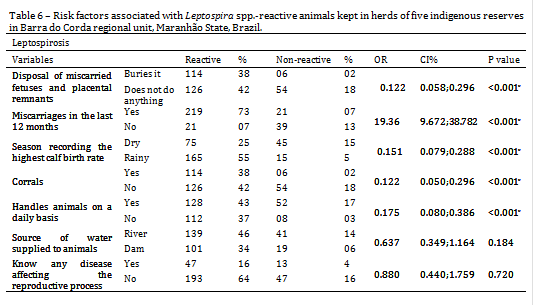
The aim of the current study is to evaluate the epidemiological aspects of leptospirosis in cattle herds from indigenous reserves. Serum samples from cows - not vaccinated against the disease and distributed in five indigenous reserves of Barra do Corda region, Maranhão State - were subjected to the microscopic agglutination technique. An epidemiological questionnaire focused on investigating the risk factors associated with Leptospira spp. infection was applied in each indigenous reserve. Of the 300 analyzed samples, 80% presented positive reactions with titers equal to or higher than 1:100. Reactive animals were identified in all (100%) indigenous reserves. The most often found serovars of the Leptospira spp. complex are herein presented in descending order: Shermani, Guaricura, Sentot, Djasiman, Patoc, Hardjo C.T.G, Hardjo Bovis, Hardjo, Hardjo Prajitno, Wolffi, Hebdomadis, Adamanda and Icterohemorragiae. Among the herein analyzed epidemiological variables, the inadequate disposal of miscarried fetuses and placental remnants, the incidence of miscarriages in the last 12 months, the calf birth concentration in the rainy season and the lack of corrals presented statistically significant association (P < 0.05) with the risk of infection. Results indicated high prevalence of Leptospira spp. infection in cattle bred in the indigenous reserves of Barra do Corda. Variables such as reproductive clinical signs, environmental factors, aspects of local infrastructure and sanitary management should be taken into consideration to help preventing the incidence of leptospirosis in indigenous reserves.
Downloads
Publicado
Edição
Seção
Licença
Autores que publicam na Acta Veterinaria Brasilica concordam com os seguintes termos: a) Autores mantém os direitos autorais e concedem à revista o direito de primeira publicação, com o trabalho simultaneamente licenciado sob a Licença Creative Commons Attribution que permite o compartilhamento do trabalho com reconhecimento da autoria e publicação inicial nesta revista. b) Autores têm autorização para assumir contratos adicionais separadamente, para distribuição não-exclusiva da versão do trabalho publicada nesta revista (ex.: publicar em repositório institucional ou como capítulo de livro), com reconhecimento de autoria e publicação inicial nesta revista. c) Autores têm permissão e são estimulados a publicar e distribuir seu trabalho online (ex.: em repositórios institucionais ou na sua página pessoal) a qualquer ponto antes ou durante o processo editorial, já que isso pode gerar alterações produtivas, bem como aumentar o impacto e a citação do trabalho publicado (Veja O Efeito do Acesso Livre).

 Esta obra está licenciada com uma Licença