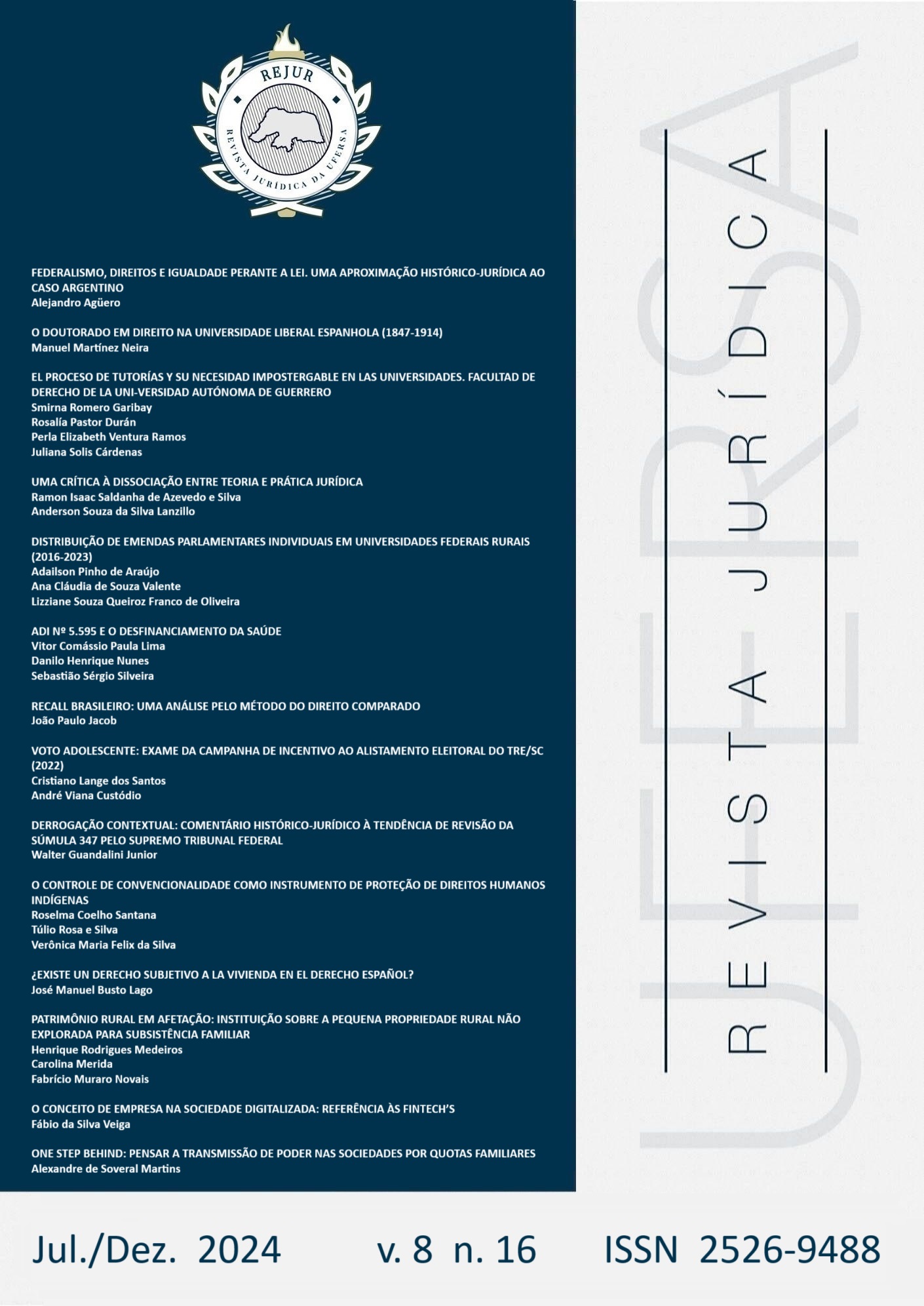
THE CONTROL OF CONVENCIONALITY AS AN INSTRUMENT FOR PROTECTING THE HUMAN RIGHTS INDIGENOUS
DOI:
https://doi.org/10.21708/issn2526-9488.v8.n16.p189-207.2024Abstract
The objective of this research was to analyze the control of conventionality as an instrument for protecting the human rights of indigenous peoples, using as a paradigm the decision against Brazil in the Xucuru case, Brazil's first conviction in the Inter-American Court (IACHR) forviolation of indigenous rights, in 2018, in parallel with the health crisis of the Yanomami people worsened by illegal mining. The methodologies used in this research were the deductive and qualitative methods. As for the means, the research was bibliographic, using doctrine, legislation and jurisprudence. It was concluded that the control of conventionality can be an important tool in defense against the violation of the fundamental rights, setout nationaland internationally, in favor of originary native peoples. However, the actual confrontation of this issue requires wider comprehension of the historical, political, social and cultural contexts behind those campaigns, as its perpasses through the necessity of creation of more effective assurance mechanisms for the Courts, such as the launch of public policies versing about more intense surveillance, so avoiding future violations by the States Parties.
Published
Issue
Section
License
Copyright (c) 2024 UFERSA's Law Review

This work is licensed under a Creative Commons Attribution-NonCommercial-NoDerivatives 4.0 International License.
Ao enviarem seus artigos, os autores concordam com os seguintes termos: 1. Cede-se à REJUR, gratuitamente e sem regime de exclusividade, seus direitos autorais; 2. Confere-se à REJUR os direitos de primeira publicação, permitindo-se o livre compartilhamento dos artigos veiculados em formato PDF; 3. Divulgações posteriores em periódicos, livros, obras coletivas ou eventos de qualquer natureza devem fazer referência à REJUR como meio de publicação original; 4. Os autores são responsáveis pelo conteúdo constante de seus textos; 5. O trabalho será licenciado também sob a Licença Creative Commons Attribution 4.0 International License (CC-BY).