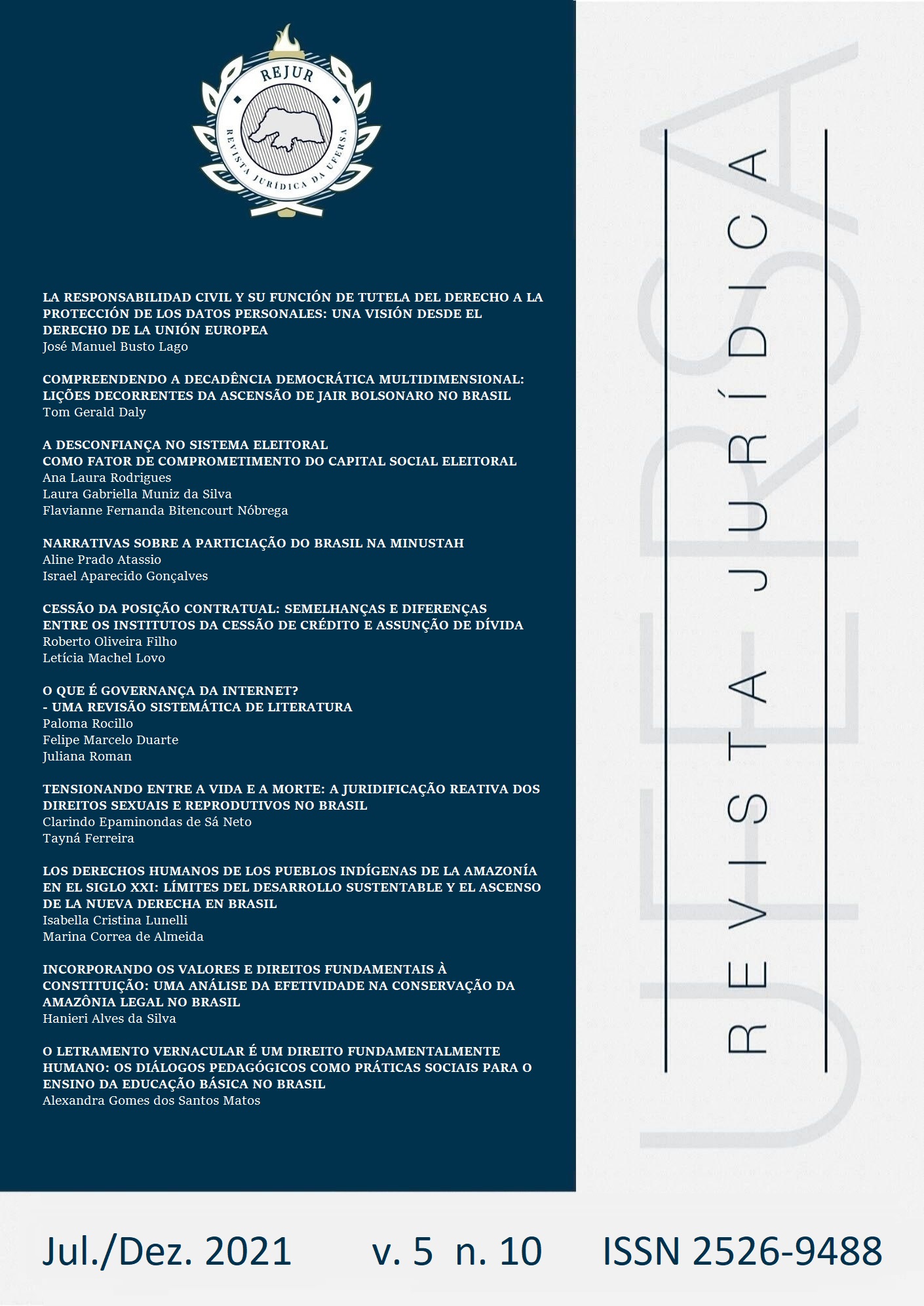
A desconfiança no sistema eleitoral como fator de comprometimento do capital social eleitoral: a descredibilidade que retrocede nos avanços democráticos
DOI:
https://doi.org/10.21708/issn2526-9488.v5.n10.p85-106.2021Abstract
After a past of electoral fraud and corruption, the introduction of electronic voting in Brazil and its gradual acceptance, consolidated electoral democracy in the country. However, this harmony began to crumble with the growing suspicion regarding this electoral model. Along these lines, this study aims to investigate distrust in electronic voting machines, as a factor for compromising the credibility of the electoral system in Brazil, as well as to elucidate the institutional transition from trust to disbelief in the electronic voting system, shaken by irritations of political actors linked to the elections, which led to clashes against the electoral results. To analyze this context, it was necessary to understand electronic voting and electoral justice as solutions to the past of successive frauds, which prevailed as strong and well-articulated informal institutions. Thus, a bibliographical review was carried out of the main authors who studied the history of the electoral system and also the themes that shaped this past, such as coronelismo and the halter vote. The research used the theoretical contribution of the Neoinstitutional paradigm of North, Brinks and Levitsky, who understand institutions as “rules of the game” and also the Social Capital framework, coined by Putnam and Fukuyama.
Keywords: electronic voting machines; electoral justice; share capital; Neoinstitutionalism; institutions.
Published
Issue
Section
License
Ao enviarem seus artigos, os autores concordam com os seguintes termos: 1. Cede-se à REJUR, gratuitamente e sem regime de exclusividade, seus direitos autorais; 2. Confere-se à REJUR os direitos de primeira publicação, permitindo-se o livre compartilhamento dos artigos veiculados em formato PDF; 3. Divulgações posteriores em periódicos, livros, obras coletivas ou eventos de qualquer natureza devem fazer referência à REJUR como meio de publicação original; 4. Os autores são responsáveis pelo conteúdo constante de seus textos; 5. O trabalho será licenciado também sob a Licença Creative Commons Attribution 4.0 International License (CC-BY).