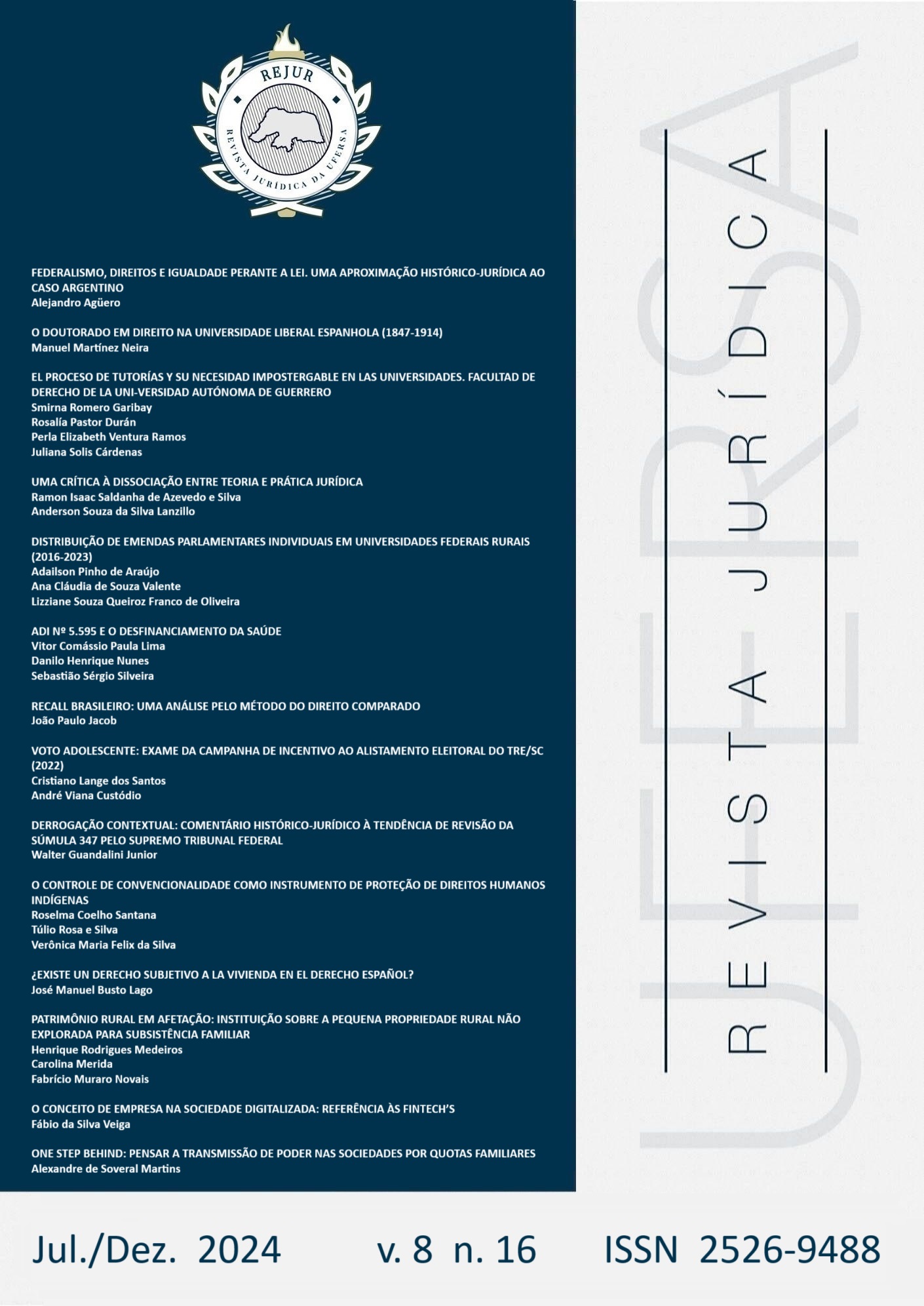
Distribuição de emendas parlamentares em Universidades Federais Rurais (2016-2023)
DOI:
https://doi.org/10.21708/issn2526-9488.v8.n16.p78-104.2024Abstract
Since 2015, the mandatory budget has made it compulsory to implement individual parliamentary amendments in the annual budget. These amendments, freely decided, can benefit entities of personal interest to parliamentarians. Despite criticism, they have been gaining ground and, with the 2016 tax regime, have become an additional source of funds for public institutions. Almost a decade after their implementation, the dynamics of the distribution of these resources have become a relevant field of study. However, few studies have analyzed how these amendments are allocated to universities, and even fewer studies have focused on the four existing rural federal universities. This study, of a descriptive nature, documentary type and mixed approach, analyzes how deputies and senators allocated individual amendments to these institutions between 2016 and 2023, in order to fill the gap identified. The main results show that there is a tendency to allocate funds to actions in the area of restructuring, expanding and modernizing universities and that, in some cases, the distribution of more funds through tax amendments is not so closely associated with the greater number of federal deputies per state. The research contributes to the advancement of reflections in the field of the mandatory budget and its relationship with higher education, suggesting new research agendas.
Published
Issue
Section
License
Copyright (c) 2024 UFERSA's Law Review

This work is licensed under a Creative Commons Attribution-NonCommercial-NoDerivatives 4.0 International License.
Ao enviarem seus artigos, os autores concordam com os seguintes termos: 1. Cede-se à REJUR, gratuitamente e sem regime de exclusividade, seus direitos autorais; 2. Confere-se à REJUR os direitos de primeira publicação, permitindo-se o livre compartilhamento dos artigos veiculados em formato PDF; 3. Divulgações posteriores em periódicos, livros, obras coletivas ou eventos de qualquer natureza devem fazer referência à REJUR como meio de publicação original; 4. Os autores são responsáveis pelo conteúdo constante de seus textos; 5. O trabalho será licenciado também sob a Licença Creative Commons Attribution 4.0 International License (CC-BY).